| |
Ageing:
The process where a whisky spends time in oak barrels
to develop its individual character. The ageing
process ends once the whisky is bottled, regardless
of the length of time it spends in the bottle.
|
|
| |
|
|
| |
Alcohol:
The amount of ethyl alcohol obtained by fermentation,
and increased by distillation. Normally distilled
spirits are sold with an alcoholic strength of 40
percent alcohol.
|
|
| |
|
|
| |
Angel’s Share:
The name given to the whisky that evaporates from
the barrels. About 2% of the alcohol evaporates
each year.
|
|
| |
|
|
| |
|
|
| |
Blended Whisky:
Refers to the mixing of whiskies made from different
grains.
|
|
| |
|
|
| |
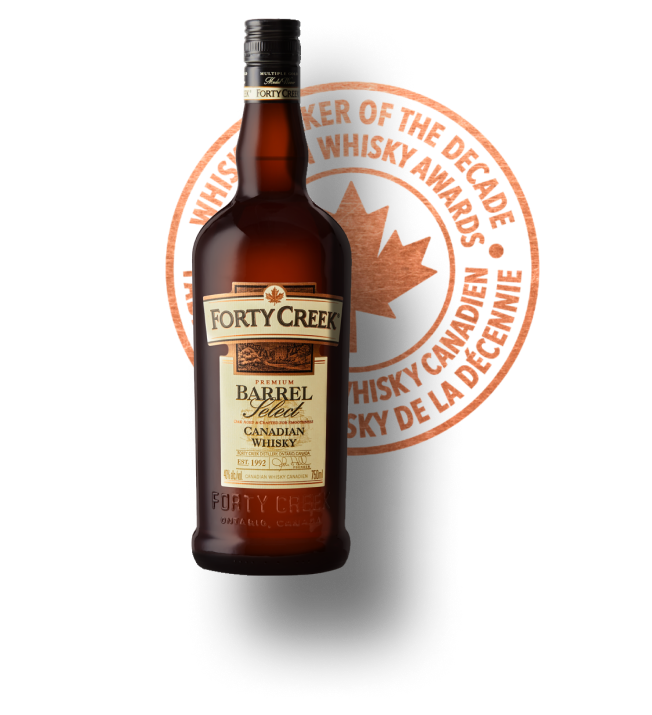
Canadian Whisky:
A grain spirit made in Canada and matured in oak
barrels for at least 3 years. Also known as Rye
whisky.
|
 |
| |
|
|
| |
Cask:
A barrel, usually made of oak, used for ageing spirits.
|
|
| |
|
|
| |
Charring:
The process of firing the inside of a new barrel,
to help flavour and colour the whisky as it ages
inside the barrel. Also referred to as “toasting”.
|
|
| |
|
|
| |
Column Stills:
Also known as Continuous Stills or Coffey Stills.
This is a cheaper and faster method for distillation
versus batch distillation in pot stills. Column
stills use plates through which steam is passed,
to strip the liquid of alcohol.
|
 |
| |
Distillation:
The process whereby alcohol is extracted from a
liquid by the use of heat. Since alcohol vapourizes
at a lower temperature than water, it can be collected
and condensed back to liquid form.
|
|
| |
|
|
| |
Feints:
Also known as “tails,” this is the end
of the distillation. This portion is low in alcohol
content.
|
|
| |
|
|
| |
Fermentation:
The action of yeast consuming sugars and converting
them into alcohol & carbon dioxide.
|
|
| |
|
|
| |
Grist:
Ground grains used for whisky making.
|
|
| |
|
|
| |
Heads:
The early portion of the distillation, containing
volatile compounds unsuitable for whisky.
|
 |
| |
|
|
| |
Heart:
The center or best part of the distillation, also
known as the “middle cut”. This is collected
and put into barrels for ageing.
|
|
| |
|
|
| |
Malt:
The name given to a grain (usually barley, sometimes
rye) that has been encouraged to germinate by steeping
it in cold water. The growth is stopped by a drying
process. The result is a grain that is rich in sugar,
enabling yeast to produce greater alcohol.
|
|
| |
|
|
| |
Marrying:
The traditional process of allowing a blended whisky
time to mingle in large containers (either oak or
stainless steel) prior to bottling.
|
|
| |
|
|
| |
Mashing:
The process of cooking grains to release starch
content.
|
|
| |
|
|
| |
Mash Bill:
Percentage of the various grains (corn, barley,
rye) used in the mashing process.
|
|
| |
|
|
| |
Mouth Feel:
Describes the effect that a whisky has on the palate.
Could be hot, smooth, light, round, lingering, etc.
|
|
| |
|
|
| |
Neat:
A whisky served neat is not diluted and served without
ice.
|
|
| |
|
|
| |
Nose:
The aroma of the whisky
|
|
| |
|
|
| |
Oak:
The wood used to make barrels for ageing whisky.
The porosity allows a slow oxidation that is important
for the whisky to develop smoothness and finesse.
Spirits also extract tannin, colour, and flavour
from the oak.
|
|
| |
|
|
| |
Pot Still:
The traditional style of still, usually made of
copper, used for distilling whisky. The Pot Still
operates in a batch distillation process, whereby
the still master separates the head, heart and tail.
|
 |
| |
|
|
| |
Rocks:
A whisky served “on the rocks” is not
diluted, and served over ice cubes.
|
|
| |
|
|
| |
Tails:
The “tail end” of the distillation,
this portion is low in alcohol. Also known as feints.
|
|
| |
|
|
| |
Yeast:
A living organism that is vital for fermentation.
It feeds on sugar, and produces alcohol and carbon
dioxide as by-products.
|
|