Wine Maker turned Whisky Maker
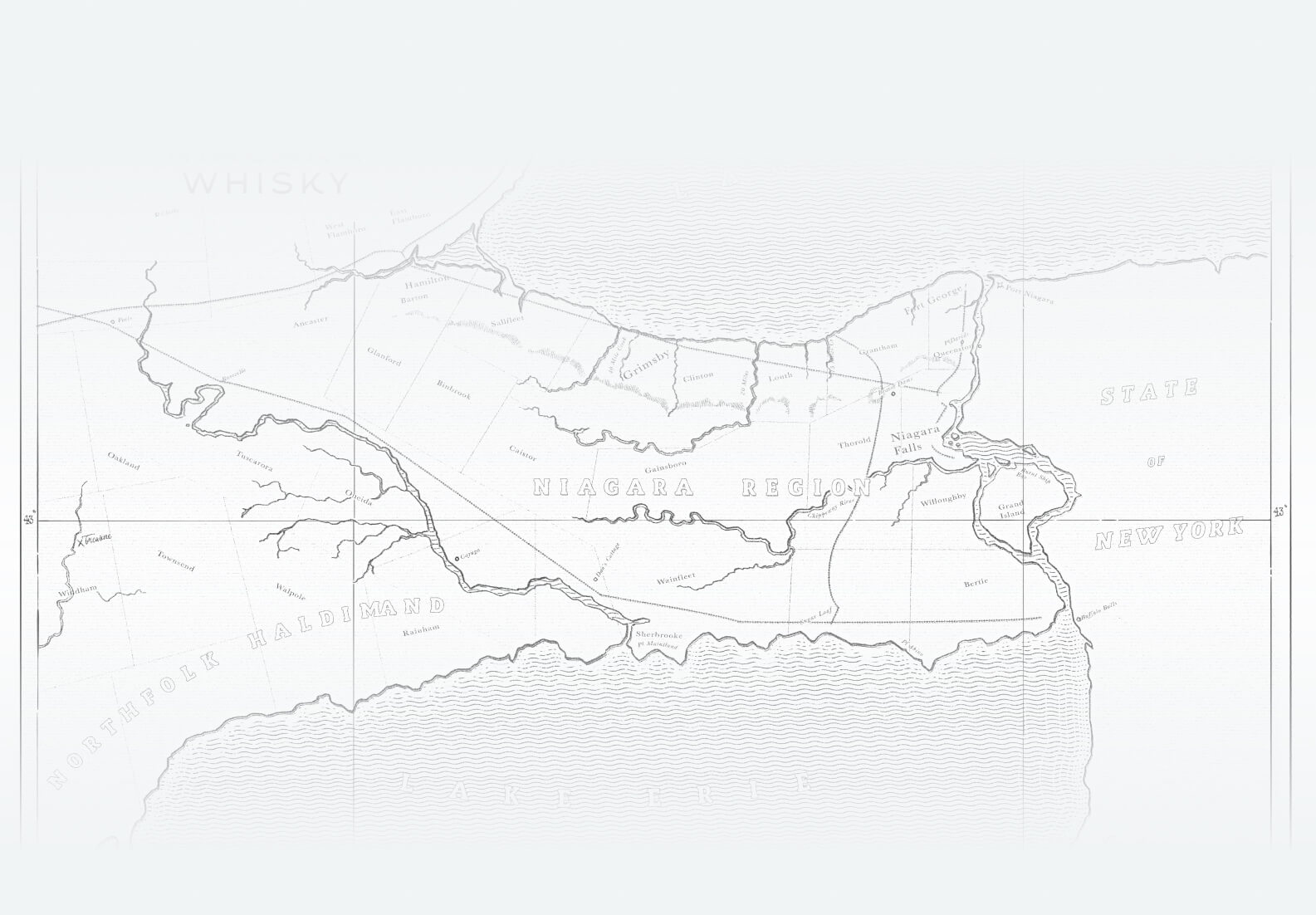
I am a winemaker by trade, however, in 1992, I decided to start
my own distillery in Grimsby, Ontario, Canada and turn my
attention to whisky. Having been a winemaker for over 20
years, I decided I needed another canvas on which to paint
to satisfy my creative thirst. Also, I have always enjoyed the
taste of a fine whisky. Scotch whisky makers were promoting
their single malt whiskies and Bourbon whisky makers were
beginning to develop & promote small batch bourbons, but
no one in Canada was enhancing the heritage of Canadian
Whisky. Over the years the craftsmanship of our Canadian
spirit was being lost amongst distillery closings and consolidations.
In the mid 1800’s there were over 200 whisky makers
in Canada yet today I am the only independent whisky maker
in Ontario.
Single Grain Whiskies
Intuitively, the mash bill concept doesn’t make sense to a
winemaker. Wines are vinted by individual varietal to bring
out the best taste characteristics from each grape type. Corn
doesn’t taste like barley, and rye doesn’t taste like corn, so why
mix them altogether at the beginning of the process? I treat
each of my grains the same way as a noble grape variety:
fermenting, distilling and aging each grain separately to highlight
the best characteristics of each grain. This brings out the
fruitiness and spiciness of the rye, the nuttiness of the barley,
and the heartiness of the corn.
Copper Pot Distilled
Today, in Canada, all whiskies are column distilled. It wasn’t like
that in the 1800’s when whisky makers used copper pot stills.
Conversion to column stills came about when whisky taxes
were imposed. Distillers chose the column still because it was
very cost effective. Flavor loss was compensated for by lower
prices. But, there is a reason why cognac and small scotch
whiskies are made in copper pot stills. Pot stills capture not
just the alcohol but also the flavor.
Great Barrels
The quality and toasting of the barrels can really change the
spirit and no two barrels are alike. Light, medium or heavy char
will greatly influence the flavor and aging of the whisky. For the
rye, I use a lightly toasted white oak barrel in order to preserve
the fruitiness and spiciness of the rye. For the barley, a slightly
more aggressive spirit, I use a medium toasted barrel to
provide smoothness and to bring out the nuttiness of the spirit.
Lastly, the corn, although when young it is a very aggressive
spirit, it can bring a great deal of weight to a whisky. Corn
needs to be aged in a heavy charred barrel to smooth and
capture the body and depth of the whisky.
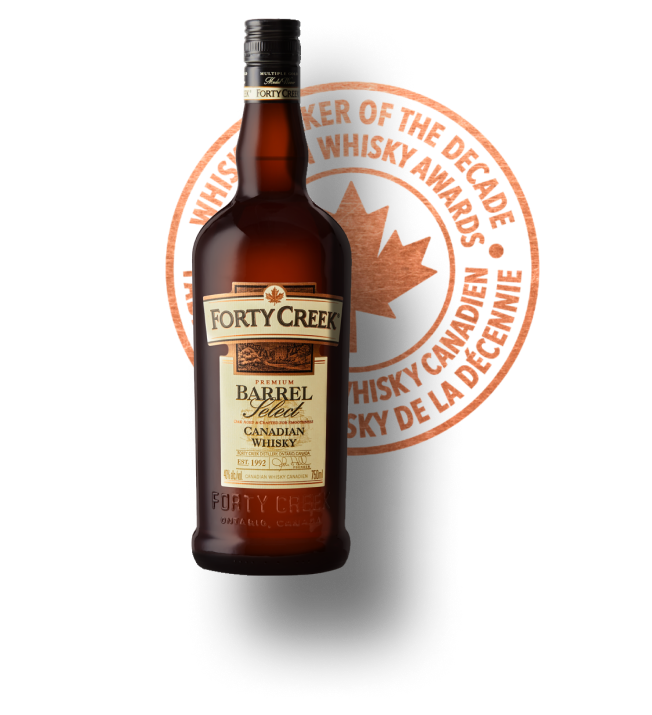
Forty Creek Barrel Select then goes through one more barrel
aging process. I select the rye, barley, and corn whiskies,
decant them from their barrels and then bring them together.
I call this my Meritage Whisky. I then put them into special
sherry casks for further aging and mellowing.
The Result is in the Bottle
By making whisky in this unique handcrafted way, I believe
I have created a whisky that is smooth and mellow but also
intense and complex with a character of its’ own.
Tasting Notes of a Whisky Maker
Forty Creek Barrel Select Whisky displays aromas of honey,
vanilla and apricot, which fuse with toasty oak, black walnut
and spice. The flavor is rich and bold with a smooth, long finish.
As you let the whisky breathe in your glass many other flavors
begin to evolve such as pecan, chocolate, orange and spice
Thank you for your interest in my whisky.
My Very Best Regards,

John K. Hall, Whisky Maker
Click here to down a pdf version of The Tales From The Creek |